Friendly reminder that one of Aphrodite’s epithets is Tumborukhos which means ‘Gravedigger’ and let’s not forget my personal favourites, Androphonos (Killer of Men), Enoplios (Bearing Weapons), Epitumbidia (She Upon the Graves) and Summakhia (Ally in War) so the next time you feel the need to underestimate the Goddess of love and consider Her a shallow, empty-headed bimbo,I urge you to think again.
oh, it’s a tragedy, of course it’s a tragedy, how can it be
anything else?
but i think the tragedy is not in his actions, not in the
father he killed nor the mother he wed nor the children he sired. no, it’s not
in what he did, it’s in who he was, the tragedy here is that oedipus was a good man and a good king and unlike so many mythical figures, he did not reap what
he sowed
the tragedy here is not that he was human and erred and suffered
due to his errors.
it’s that he did not err, and suffered, it’s that the sins
of our fathers are our sins too and we cannot escape them
the oracle of delphi gave a prophecy that foretold that any son
of king laius would kill his father and marry his mother. so when his wife and
queen jocasta bore him a son, he had the baby’s ankles nailed together and
ordered him to be left to die.
laius erred. laius planned to kill his son of blood, who had committed no crime, who was in perfect health, who had done nothing but be born. it is laius
who committed the sin of infanticide, and through this sin all other such
events transpired
a shepherd spirits the infant away instead of leaving him to
die, and he is eventually brought to the house of king polybus and queen merope, where
he is adopted. laius and jocasta have no more children, even though this leaves
laius heirless. since we know jocasta will later bear four more children, we
know it is not her whom is the issue here. after laius commits this grievous
crime, he is left sterile, and this, here, is where i believe the curse truly
begins.
the curse over thebes does not begin with oedipus’s rule,
with his supposed transgressions. it begins with his father’s sin.
oedipus grows up a devoted and loving son. he eventually hears
rumors about his strange birth and consults the same oracle his birth father
had, and is told the same prophecy. not knowing he’s adopted, he think the
prophecy refers to polybus and merope, and he flees his home, horrified at the
thought that he could ever harm his beloved parents in such a way.
he’s traveling, and upon a crossroads he meets his birth
father, laius. they do not know or recognize eachother. they quarrel about who may precede
first. it’s important to note that laius is the one who attacks first, who’s so
offended that this unknown man will not move for a king that he tries to kill
him, unknowingly attempting to murder his son a second time.
oedipus kills laius, not knowing he’s a king or his father, rather
than let himself be killed, and fulfills the first part of the prophecy. once
again, it is laius’s actions that are the incendiary actions here. if he had not
attempted to kill oedipus, perhaps he wouldn’t have died. if he hadn’t thrown
his son away, oedipus never would have killed him, since he was so aghast at
the possibility of harming his adopted parents that he ran from his home and
his life rather than risk it.
oedipus acts in self defense. even if he hadn’t, laius had
already tried to kill him once, although neither of them had been aware of it.
a trial by combat would be the least of what oedipus would be owed. he breaks
no laws, does not act in hate or malice or fear. oedipus kills laius, kills his
father, but no great sin is committed. patricide is a sin, but defending
yourself is not, refusing to die is not a sin.
so he travels, and lands upon thebes, where a sphinx has
taken residence, eating anyone who attempts to enter the city and cannot answer
it’s riddle, effectively cutting off all trade to thebes and trapping all its
residents inside, lest they leave and never be able to return. was the sphinx
here when laius left? we do not know. it doesn’t say.
but if it was – did laius leave his city to die? was this
sphinx just another piece of the curse laius had brought down upon thebes by
attempting kill his freshly born son?
oedipus, a cleverer man than any who have yet tried to enter
thebes, answers the sphinx’s riddle, and the creature leaves, having been
defeated by this man’s intellect.
oedipus is a man who has shown himself to be strong enough
to kill a king, and clever enough to defeat a sphinx. he has not harmed any who
did not first try to harm him, was so against committing harm against those he
cared about that he simply left them behind. oedipus so far has shown no fatal
flaw, no poor judgement, nothing damning or ruinous.
jocasta’s brother, creon, had said any man who could rid
thebes of the sphinx would be named king, and given his sister’s hand in marriage.
oedipus had not known about this before arriving. he had not come to thebes
with the intention of becoming king.
but king he becomes.
he is given jocasta’s hand in marriage, and the final
portion of the prophecy is complete. he weds and bed and fathers children with
his birth mother.
notice, however, that this only happens in the first place
because of how honorable and kind oedipus is to begin with.
jocasta is in her forties, at least. she may be a beautiful
woman, but she’s not a young woman. yet there are no accounts of oedipus being
unfaithful, or cruel. jocasta bears him four children, two sons and two
daughters, when during those long years after oedipus she had not had another
child with laius. if oedipus had rejected this widowed queen, said her age made
her unsuitable, had taken mistresses, had kept her as a wife in name only –
then perhaps so much pain could have been spared.
but he didn’t do that. oedipus took a wife twice his age, at
best, took a woman who was not a virgin, who had been the wife of this land’s
former king, and he dedicates himself to her. he is faithful and attentive, and
she must be fond of him, because she later tries to shield him from the truth
when she uncovers it.
which part of his actions can we take account with? yes,
jocasta was his mother, and it is incest – but he didn’t know that. he didn’t
want that. to do otherwise than what he did, to cast aside his gifted bride,
could only be considered cruelty. and oedipus was not cruel.
many years after this marriage, a plague strikes thebes. why
is not clear, because if it were truly due to oedipus’s actions, to the gods
taking offense at this incestuous union between mother and father-killer,
surely it would not have taken years to come to fruition?
but a plague comes, and the oracle says that the only way to
lift it is to see that laius’s killer is brought to justice.
(is it laius, yet again, bringing sorrow upon his city? is
it his restless spirit which curses all of thebes? it is a strange coincidence
that the infertility which he was cursed with after trying to kill his infant
son is the same plight that now faces all of thebes.)
and of course, of
course, honorable and kind oedipus vows to bring the killer to justice,
says that this killer will be exiled for his crime of murdering the king.
exiled, not killed, what a peculiar punishment, what a merciful punishment for a king killer,
what a merciful judgement from a merciful man.
but things unravel, as they do. he tells creon to bring him
the blind prophet tiresias, who tells oedipus that he must stop digging into
this matter. but the good of his city is at stake, so he can’t, of course he can’t,
and tiresias calls him false for not knowing his true parentage. he and creon
quarrel, and slowly, oh so slowly, the truth comes out.
a messenger comes, saying that his adopted father has died,
and oedipus is relieved. not for any malicious reasons, but because it means he
won’t fulfill his prophecy of murdering him. he refuses to go home because
merope is still there, refuses to take up the title of king that is surely his
by right, because he fears harming his mother. when the messenger says that
oedipus is adopted, and there’s no reasons for him not to go home, jocasta finally
realizes that oedipus is her son. she begs him to stop his search for laius’s killer, desperate to
keep the truth from him.
jocasta knows, and tries to protect oedipus. she must
believe he’s worthy of being on the throne, he must have showed her kindness and
affection if she’s so desperate to protect him from the truth, even at the
expense of the well being of thebes.
but oedipus does not listen. he leaves, and finds the shepherd
who gave him to his adopted parents so long ago, and discovers the truth.
he is the son of lauis and jocasta. lauis is the man he
killed at the crossroads. he has killed his fathe and married his mother, all
them each unaware of each other.
after this, there are differing accounts of what happened
next.
sophocles’s account is most popular. he returns to find his
wife and mother jocasta has killed herself, and he takes the pins from her
broach and blinds himself, unable to stand the sight of her. he is then exiled,
as he said laius’s killer would be, and his daughter antigone guides him until
he dies soon after.
in euripides’s version, jocasta does not kill herself.
oedipus is blinded by a servant of laius, and so justice is still served to laius’s
killer, and he continues to rule thebes. i like to think jocasta rules with
him, alive and well, because she no more deserved death than oedipus deserved
blindness.
the tragedy here is not in oedipus. it is in lauis, the
clear villain of this story, the one who damned and hurt and cursed all around
him. he who caused so much strife, and then left it all for his son to fix, for
his son to struggle with.
but he did fix it.
oedipus was a fair and just ruler of thebes, a kind husband
to jocasta, a good father to his children, from all accounts, since antigone was
so devoted to him, and he was disappointed in his sons for their selfishness because that’s not how he raised them.
perhaps oedipus is a story of how our fathers, our
predecessors, those who come before us will curse us and damn us and leave us
more problems than solutions can be found
perhaps oedipus is a cautionary tale, and our tragic figure
is not oedipuis, but laius, who made his own ruin, who’s spiteful hands left
scars on all they touched.
oedipus is a tragedy, but only because it reminds us that
our own undoing, our own unhappy endings, aren’t necessarily within our
control. our own tragedies may not be our fault, may not be due to our
mistakes, maybe we didn’t earn our unhappiness.
it’s not fair.
it’s not fair, and that’s the true tragedy of oedipus. that
good, kind, clever, merciful people can do their absolute best, can show
kindness and sacrifice and love, and in the end it won’t be able to save them
from the mistakes other people have made.
oedipus was a good man, and a good king, and it may not have
saved him – but it saved all those in thebes.
yes, oedipus was blinded. yes, jocasta died.
but the spinx was gone, their line continued, and thebes
thrived.
the tragedy of oedipus is the idea that we’re not in control
of our own destiny.
the triumph of oedipus is the idea that we need not control
it in order to have a destiny worth remembering.
my analysis is that oedipus is a refutation of the just world fallacy.
being good will not save you from the consequences of other people’s bad actions, or from plain bad luck. and your heroic efforts to mitigate those consequences and live up to your responsibilities aren’t wasted just because it’s not your mistakes you’re correcting.
Þrymskviða. Compressed down, it goes like this: A Jotun steal Thor’s hammer Mjolnir and says he’ll only give it back if he’s given Freyja to marry, as she is the most beautiful goddess in all of existence. The gods argue over what to do for a while before Heimdall suggests they stick a bridal veil on Thor, says he’s Freyja, and pretend they’re giving Freyja (Thor) to the Jotun to marry so Thor can get close enough to the Jotun to steal Mjolnir back.
Now typically when people talk about this story, it’s with an element of disbelieving comedy. “Oh my god, who would believe Thor was a woman, let alone Freyja, the most beautiful goddess in the world?”
But I propose a different way to look at the story.
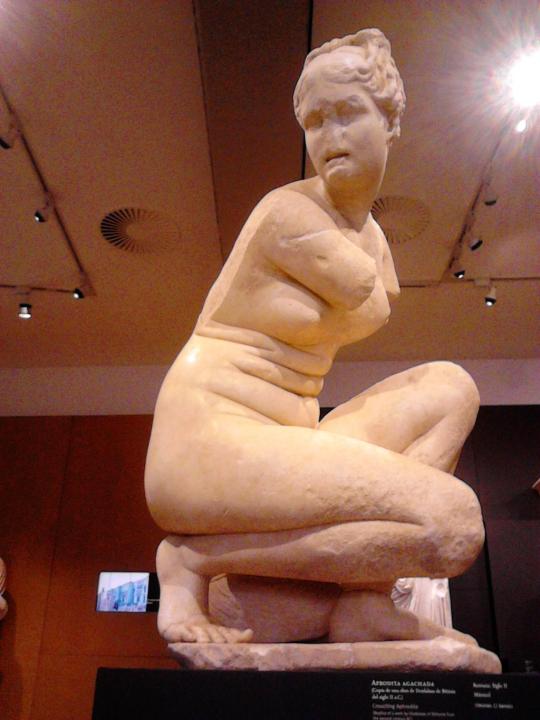
See, different cultures have different beauty standards. Modern western beauty standards may be a delicate hourglass supermodel, but that’s not always been the case. Greece, for instance, depicted Aphrodite like this:
Yeah. A Greek sculptor was told “sculpt the goddess of beauty” and they thought “alright, fat rolls, that’s where beauty is at, let’s do this”. And everybody else apparently agreed with them, because up went the statue. Beauty is a malleable concept is what I’m getting at.
Now this is where it becomes relevant that Freyja is not just the goddess of love, sex, and beauty. She’s also the goddess of war. And the righteous dead. Goddess of war in the same Viking warrior culture that gave us shield maidens, women who wielded seven fucking kilogram (15 lbs) shields in combat.
Sooooo … when the Norse storytellers said, “This is Freyja, goddess of war and the righteous dead, who rode giant murder cats into battle, she is the most beautiful goddess in the world”, I’m guessing they weren’t thinking of her as some willowy waif. No, I’m guessing they probably thought more along the lines of:
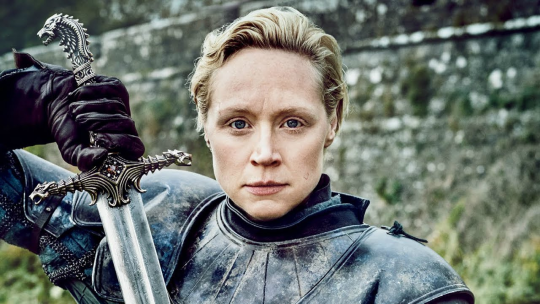
190 cm (6′3″), broad shoulders, built like a brick shithouse, with a jawline like whoa, and fully capable of murdering everything in her path.
Put in that context, the story of Thor dressing up as Freyja sounds less like a punchline about “how could anyone ever mistake Thor in a veil for Freyja?” and becomes more a case of “ohhhhhhhhhhh, no wonder all the gods thought this plan would work”.
A sitcom about the modern Greek gods where everyone is wildly miscast
Zeus is played by Michael Cera
😂😂😂😂 Hephaestus is Nikolaj Coster-Waldau
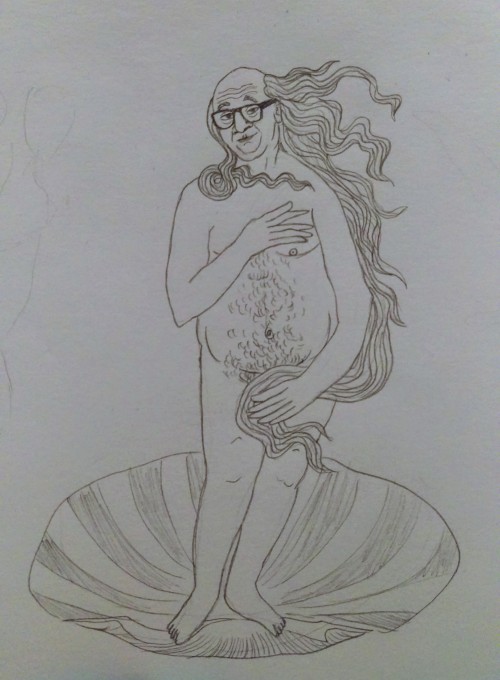
@seerofbirds has cast Danny DeVito as Aphrodite and @qrowxiii has cast Eddie Murphy as Ares, so this is shaping up to be a pretty great TV pitch and if anyone from Hollywood is reading this, could you also consider casting Dwayne ‘the Rock’ Johnson as Hermes and Christopher Walken as Apollo, thanks.
Hera is Oscar Isaac because are you really going to cheat on Oscar Isaac, Michael Cera? Really? You’d do that? You’d look at that man’s face and chase tail somewhere else, Michael Cera, you sack of shit?
I’m dying this is fantastic I NEED THE WHOLE CAST
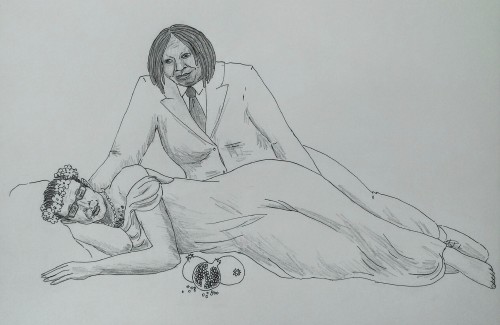
Hades is Whoopi Goldberg and Persephone is Jeff Goldblum and Demeter is Julie Andrews. Their interplay makes up 70% of the film and is all improvised.
Athena is played by Amy Schumer (thanks anon!) and she defeats her enemies by being incredibly loud and annoying and plagiarising all their tactics and eventually they just give up in irritation. She only has 3 minutes of screen time and no dialogue. Thank fuck.
Heracles is played by Jesse Eisenberg because Michael Cera got to be Zeus. Sometimes they swap roles. No-one notices.
Poseidon is played by Daniel Craig but his only scene is when he reenacts the famous Bond scene with speedos.
Artemis is played by Robert Pattinson and all his lines are just slightly amended from Twilight. Dionysus is played by Helen Mirren. It is perhaps the only apt casting in the film.
To clarify, Hestia is absolutely played by Charles Dance, whose costume includes an apron which gets progressively dirtier throughout the series.
In the sitcom, which precedes the feature film and which focuses on certain myths every episode, Narcissus is played by John Goodman. Echo is played by Billy Crystal.
Other episodes include the story of Eros and Psyche, played respectively by Jane Fonda and Shirley MacLaine, the story of Daedalus and Icarus, played respectively by Reese Witherspoon and Laura Dern, and the story of Zeus overthrowing Cronus, in which Michael Cera as Zeus must defeat Cronus, as played by John Cena, in a battle of wits and muscle. Astonishingly, he wins.
this is all very good gud
but who is perseus and medusa? jason , Midas, circe, media, please I NEED TO KNOW
These are very important questions and I will answer them immediately.
Perseus and Medusa are played by Andy Samberg and Glenn Howerton. All their scenes together are just them one upping each other with improvised insults.
Jason and Medea are played by John Boyega and Meryl Streep, and all their scenes are so beautifully acted that they both get nominated for Oscars, despite the fact that one of Jason’s lines is “are you trying to fleece me out of the golden fleece?”, to which Medea replies “me, fleece you? Oh no, me dear.”
Midas is played by Steve Buscemi, obviously. For no discernible reason, everything he touches does not turn to gold, but copper alloy. This is possibly due to budget cuts. Due to their on screen chemistry, he bizarrely has several buddy cop style scenes with Jeff Goldblum’s Persephone.
Circe does not appear. If she did, she would be played by Audrey Hepburn, using that creepy CGI from the Galaxy adverts, but her estate refuse to give their permission.
Important updates:
(Anonymous suggests: Kelsey Asbille Chow playing Achilles, Michelle Obama is Thetis, Danny Trejo as Helen, Terry Crewes as Paris, and Adrien Brody as Hector. olvmpos says: Ganymede is played by Arnold Schwarzenegger, and regularly benchpresses Michael Cera.)
Hey @teashoesandhair I’m not saying that I felt inspired and sketched Whoopi Goldberg and Jeff Goldblum as Hades and Persephone but that’s exactly what I’m saying
OH GOD THIS IS PERFECTION. THANK YOU. JUST THANK YOU. PHENOMENAL.
YOU’RE WELCOME BUT ALSO PLEASE HELP COS I CAN’T STOP
THIS IS GOING TO BE THE POSTER FOR THE SERIES, YOU HEAR ME
I’m mad that people are just reblogging the first post here because YOU’RE MISSING OUT ON THE MOST INCREDIBLE ARTWORK YOU’LL EVER SEE
Okay, I gotta ask, who’s the Hyacinthus to Christopher Walken’s Apollo?
I can already hear Apollo’s relevant lines in Walken’s distinct cadence, but I wanna know who he’s cradling, devastated, while crying out in anguish and also pausing at all the wrong places.
What a great question, and it brings me absolute joy to reveal to you that it’s Jackie Chan. He does all his own stunts. There is only one stunt, and it’s him collapsing into Christopher Walken’s arms. For some reason, there are explosions.
We’re hurtling towards the void on a dying planet and there’s a 50% chance we’ll exterminate one another in a nuclear winter before the sun dies and we’re all killed by that which sustains us, and also we’ve never seen Zeus played by Michael Cera, so

 Cheloneuniverse