you know what i don’t see enough of? circus kid dick grayson critiquing the joker because he’s a bad clown. not like, bad, and also a clown. but bad at being a clown. i want to see dick grayson taking the existence of this horrible clown very personally as a matter of professional pride. he has known clowns, and you, sir, are no clown. the joker is an insult to the legacy of emmett kelly and this shall not stand.
do you think they refuse because he’s not a real clown
like someone inquires about the joker and so they put out a press release to state that not only is he not registered with clowns international, they will not be accepting applications from the fucking joker, because he’s not even a clown and he doesn’t even wear makeup, you don’t get to register your regular-ass non-clown face
batman has to theoretically protect the fucking clown egg registry from the joker throwing a tantrum, but quite frankly he doesn’t have to do much because it’s the joker versus an army of real actual clowns defending the history of their noble profession
To think that I bought a copy of The Killing Joke when I could’ve held out for the *finest* Joker storyline.
I’m sure in the DC universe clowns would just have their own designated superhero protector anyway
Someone else will have to consider this, because I don’t actually know who Red Hood is ^^;;
It’s definitely interesting? (Red Hood is the name Jason Todd, the second Robin after Dick Grayson, started using after he was murdered by the Joker, revived by a villain through a method known to cause people to come back different degrees of insane, and then decided that Batman’s no kill policy wasn’t workable.)
Tarvek, Klaus’ second sidekick, hates and admires his predecessor, Gil. Tarvek has his own skills, plenty of them thank you very much, but he can’t shake the feeling that Klaus is looking at him and searching for something else. A cocky grin, an easy way with people, and a goodness strong enough to balance his mentor. Tarvek knows he doesn’t have that, alright? Tarvek knows.
He isn’t acrobatic, like Gil, can’t laugh off gravity like it’s nothing, doesn’t have that easy understanding of his own body. And Gil? Gil resents him, and it took Tarvek time to properly understand why.
He does, now, but that hasn’t made it hurt less. It stings, being resented by someone you love admire so much.
Tarvek masters it. His goal isn’t and never has been to be exactly like Gilgamesh Hollzfäller.
He’s not quite a hero, but he’s going to try his best to be something, anyway. –
Gil easily danced his way out of a dozen altercations such as the one that kills Tarvek with flips and laughs.
Maybe he really was missing something vital, is one of the last things he thinks as he waits for a rescue to come that…doesn’t. –
Tarvek wakes up after dying.
Tarvek wakes up screaming and wild from one of Lucrezia Mongfish’s mad and distressingly functional experiments in eternal life.
Heroes get brought back so often it’s hardly surprising anymore. But not. Not like this.
Lucrezia is the same as always, and Tarvek plays along, at first, but then there’s a girl.
At first Tarvek thinks she’s a trick. Because she’s obviously one of Lucrezia’s spare bodies, with her distinctive gold hair, vivid even in the sickly light of the Pit, and the voice Tarvek has heard croon to his mentor—his old mentor—in a hundred different tones.
But she’s not, the girl insists. She’s her daughter, and she thinks that she should know, thanks, but if he’s going to be cheeky maybe she won’t help him away from Lucrezia and her plans to use him as a tool after all.
“You look like you’ve been playing along with her,” she says, “but I need help out of here, too, so we need to make this work.”
The girl, whose name is Agatha (and that’s odd, in a family of Lucrezias and Serpentinas and Demonicas) is brilliant, and Tarvek falls a little bit in love.
(Again.) –
Tarvek goes back to Klaus’ city. It’s not smart, but the whole world has always been there, for Tarvek, and other places just don’t compare. And there’s still so much to be done, so much more than Klaus will ever do.
Klaus has taken a new apprentice, and Tarvek understands, viscerally, why Gil was such an utter boor sometimes.
Tarvek goes back, but not backwards. He’s done pretending to be something he’s not. He’s not a hero, so he doesn’t belong with them, shouldn’t wear their trappings.
He’s better at other things. He learned things from Lucrezia, and he’s going to put them to good use. –
Gil’s scorn hurts, again, but differently now. This is personal, and real. This has nothing to do with Gil’s confused relationship with his father. (His father, of all the things to come out while you’re dead—) The scowls on Gil’s face say I don’t understand how you can be like this.
But Gil and Klaus were never entirely approving of him, so it doesn’t mean much. –
What does matter is—
Tarvek doesn’t realize he’s become someone he doesn’t like until he meets Agatha again.
Agatha has come into her own, out of the darkness of Lucrezia’s main lair. He’s heard a few rumors about how it’s like a kicked hornet’s nest wherever she goes, accompanied by an increasingly colorful cast of metas and just generally odd people. (Okay, he obsessively seeks out and collects newspaper articles.) But in person she’s…something. The last clinging, sucking weight of her past has left her, and Tarvek feels envy at that, briefly and violently.
She’s a sight, and it’s the look on her face when she sees what he’s doing that makes him realize he’s become something horrible. His feelings when it’s time to share his plans with her, the panicky guilt of a child who has done something they know is wrong, that confirms he’s gone too far. –
“I can become a better person if it’s for you,” he insists.
“That’s not how being a good person works,” she says, sounding fed up with him. –
When he sees Gil again after that Gil of course doesn’t trust him, and he doesn’t like how Agatha trusts him. Apparently, they know each other. And Tarvek is so used to being resentful of Gil that he doesn’t see see it for what it is how Gil is a thousand times more tolerant of Tarvek than Klaus, who Gil looks up to more than anyone else in the world, is.
Gil says “You shouldn’t be here,” and Tarvek hears, “I don’t want you here” where he means “It’s not safe; you’re making things harder for yourself.” And Gil, who was mentored by the king of poor communication, never voices “I’m so glad you’re back.”
Perhaps in the margins of darkness, I could create a son who is not missing; who lives beyond even my own imagination and invention; whose lusts, stupidities, and strengths carry him farther than even he or I can anticipate; who sees the world for what it is; and consequently bears the burden of everyone’s tomorrow with unprecedented wisdom and honor because he is one of the very few who has successfully interrogated his own nature. His shields are instantly available though seldom used. And those who value him shall prosper while those who would destroy him shall perish. He will fulfill a promise I made years ago but failed to keep.
– House of Leaves, Mark Z. Danielewski
“He’s only one man. He isn’t in every patrol car, or walking every beat. It helps for other cops to see someone like me working next to them. Being a woman makes it harder. I end up with a lot to prove.”
stephanie beatriz as renee montoya/the question ii
Note: I’ve been a fan of Renee Montoya since Batman The Animated Series, but I didn’t realize how significant her character was until I looked into the comics.
She was a queer WOC, an honest cop in a department full of corrupt white men who went on to become a costumed hero in her own right. Even after she became The Question, she regularly faced Gotham’s notorious without the benefit of a protective suit, advanced fighting skills, a scary reputation and gadgets.
A lot of fancasts I’ve seen for Renee usually go with Michelle Rodriguez, but I decided to go a different route after seeing Stephanie’s portrayal of Rosa Diaz in Brooklyn Nine Nine.
Eva is actually perfect casting for a couple reasons:
She’s Cuban like Selina is suppose to be in the comics.
She’s 42, Ben Affleck is 44, no creepy age gaps.
Since Selina’s post-crisis she’s-Latina reveal in the 90s there’s been two on screen adaptions of the character (Gotham, Dark Knight Rises) both have been white. It’s time to cast a Latina woman in the role since the character is suppose to be Latina. There’s an on-going history of Latinx people being whitewashed in media, or cast with light skinned Latinx actors or changing the way darker Latinx actors look to make them appear “more white” (see how Jessica Alba looks in Honey or Spy Kids vs how she looks in Sin City or Fantastic Four).
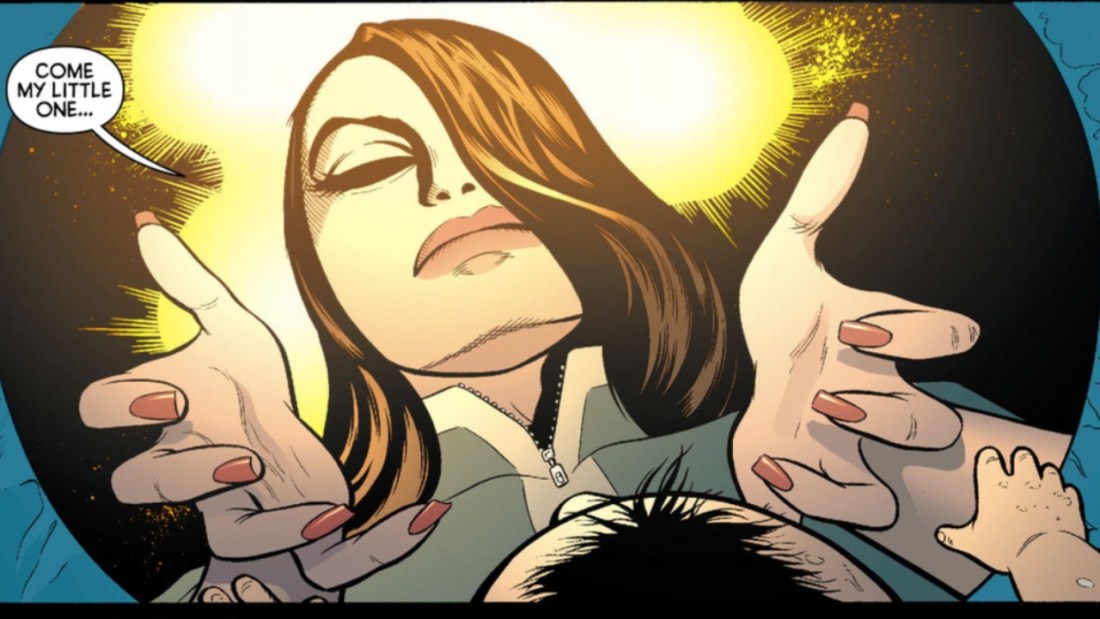
idea: villain with illusion powers tries to pull the whole “actually bruce wayne’s parents never died and that other life was all a dream ps as long as you’re here write down all your passwords and write a huge check to this guy your parents say is your friend” thing but is unsuccessful because it is basically impossible to impersonate bruce’s parents
“when did you figure it out?? >:[”
“i’ve known this was fake from the start, this woman looks nothing like my mother. red lipstick with nude polish?? that dress doesn’t suit her coloring. i said i was deliberately leading vicki on and she didn’t try to ground me, just because i’m a grown man. that’s not how my mother pronounces the word yeti. and this guy! he’s not tall enough to be my father. he hasn’t tried to pick me up even once. and neither of these people has had an uncomfortably flirtatious conversation with the butler in the last six hours. you fool. you imbecile. how could you possibly have thought that this would work.”
this is only tangentially related to my original point but I imagined some kind of shapeshifter or something trying to kidnap little bruce and i just
“I am so sorry, Mrs. Wayne, I can’t imagine what’s come over him, Bruce has never done anything like this before.”
Bruce watched this exchange silently from inside the art supply closet in his fourth-grade classroom. Ms. Harris remained oblivious to the inherent wrongness of the not-Mom wearing his mother’s face.
“He just has an overactive imagination,” the not-Mom reassured her. Her voice was syrupy. She bent to look beneath the desks.
Someone cleared their throat by the classroom door. Bruce tilted his head to try and see who it was.
“Mr. Pennyworth,” said Ms. Harris, pleasantly surprised.
“Mr. Pennyworth,” said not-Mom, less-pleasantly surprised. “You must not have gotten my message. I’ve decided to give you the evening off and spend some time with…”
A reassuringly ominous click of heels against tile silenced the not-Mom.
“… Mrs. Wayne…?” Ms. Harris asked, as alarmed as confused.
“Hello, Ms. Harris,” said the real Mrs. Wayne. She gestured gracefully to her would-be lookalike. “I see you’ve met my long-lost schizophrenic twin, Helga.” She did not so much say the name as dislodge it from her throat. It was not an explanation meant to be believed; only accepted.
“Ms. Harris,” Alfred said, “would you like to come with me for a moment?”
Real-Mom clicked her tongue chidingly. “Oh, Mr. Pennyfarthing, you know very well she would. I believe the music room is empty if you’d like to pop in for a quick canoodle.”
“I — excuse me?” Ms. Harris was a little overwhelmed, and a lot pink. Alfred took her gently by the elbow to guide her toward the door.
“Oh, heavens, if you insist.” Real-Mom waved the two of them away. “Pennywhistle, you may give Ms. Harris as brief or as extensive a canoodling as you feel she requires.”
“Of course, Ma’am.” Alfred was singularly unruffled.
“I don’t know who you think you’re fooling,” the not-Mom said once they were alone, “but I won’t let you take my son.”
“Is that what you think I sound like?” Martha asked. “How offensive. And in the same outfit I was wearing this morning. What do you think I am, a farmer?” She sniffed disdainfully. “You can’t have fooled my Brucie for a moment. The real giveaway would have been the purse.”
“Is that so?” asked not-Mom. Bruce clutched anxiously at the shelf as the not-Mom approached real-Mom.
“Oh, yes.” Martha smiled, a glint in her eye. Bruce found it a comforting glint. “That is the sort of purse I’d bring if I were popping out to a fitting or some such thing. Just the essentials: a checkbook, a pen, some luminol, an aspirin. If I were stopping by Bruce’s school, I’d bring a purse like this one.” She gestured with her red leather tote.
“And what do you keep in a purse like that?” the not-Mom asked.
“A bronze miniature of Rodin’s The Thinker,” Martha said, still smiling. At which point she swung her purse at the not-Mom’s head. It struck with an echoing clang.
“Mom!” Bruce pushed the closet door open, jumping down from the shelf on which he’d stashed himself.
“Stop right there,” Martha warned, and Bruce skidded to a halt. “Turn around.” Bruce spun around slowly, holding his arms straight out. “Were you planning to run away to Seattle?” she accused in faint horror.
Bruce huffed, heavy with indignant petulance as he let his arms fall. He was wearing a flannel shirt from the school lost-and-found. His not-Mom hadn’t said a word. “I got paint on my clothes during art,” he explained.
Martha narrowed her eyes. “Hands,” she ordered. Bruce held his hands out in front of him for her to see, fingers splayed. His fingertips were stained purple. “The little redhead again?”
“Jamie,” Bruce supplied.
“Nail polish and paint are not interchangeable,” Martha scolded, “no matter how pretty the person holding the brush.”
“Yes, Mom.”
“And plaid is for kilts and lumberjacks,” she added.
“Yes, Mom.” Bruce looked, for the first time, at the fallen body of the not-Mom. Wiring and metal protruded from the neck. “How did you know it was a Terminator?” he asked.
“A what?”
Bruce frowned. “You couldn’t hit a person like that,” he said. “They’d die. How did you know it was an evil robot?”
Martha pursed her lips. She looked at the thing with her face on the floor. She looked at her son. “I’m very clever,” she explained.
Bruce nodded seriously.
She sighed, putting her hands on her hips as she considered the imposter. “We really ought to do something about this before some poor child gets traumatized.” She gave the word three more syllables than was strictly necessary.
“Can’t Alfred do it?” Bruce asked.
Martha consulted her watch, and sighed again. “For Ms. Harris’ sake,” she said, “let’s assume he’ll be wanting at least another ten minutes. Realistically, let’s expect to see him in three.”


















 Cheloneuniverse